
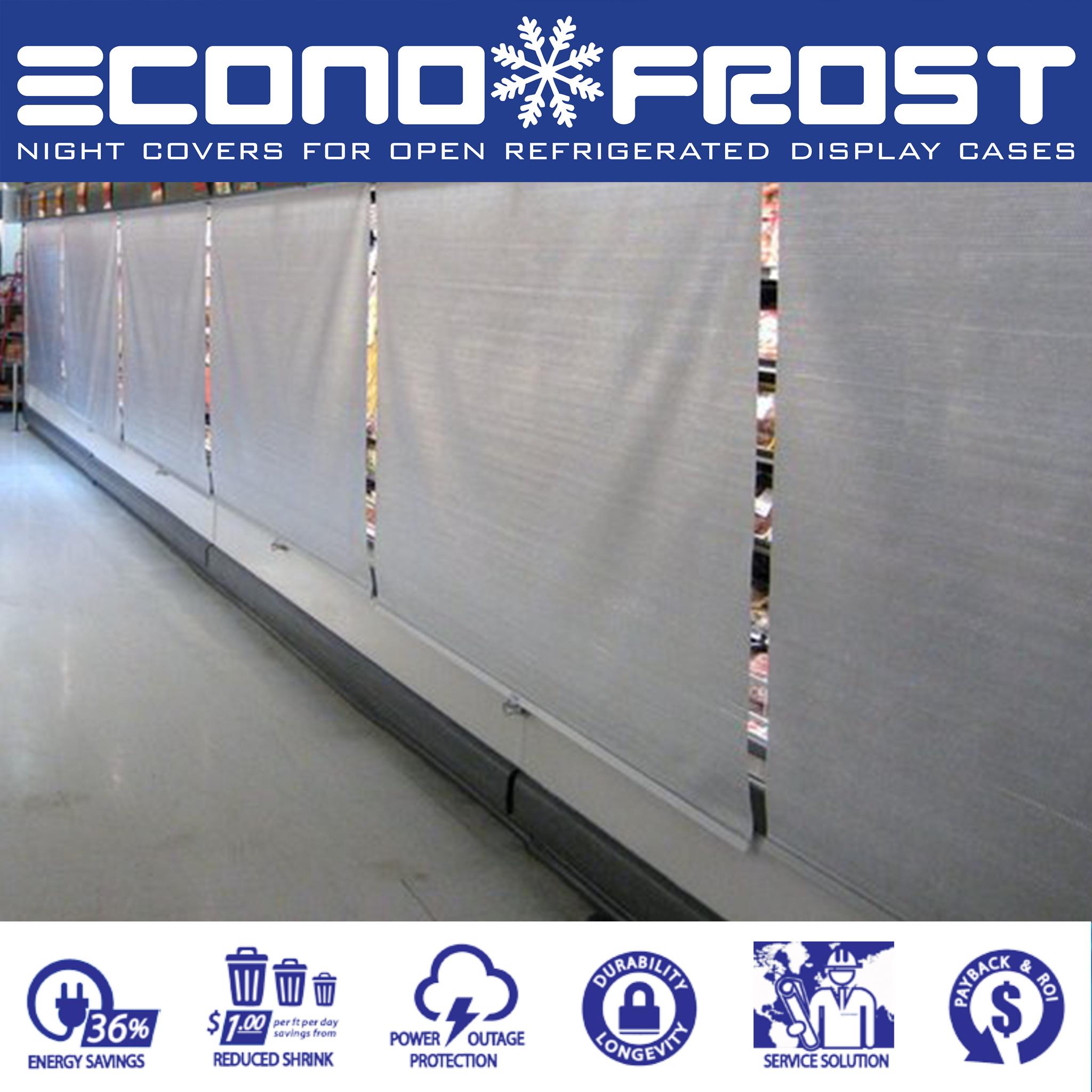
In the world of commercial refrigeration, night covers have traditionally been viewed as an after-hours tool—pulled down once the store closes to help conserve energy. But forward-thinking retailers are discovering that strategic use of night covers even during operational hours can dramatically reduce energy waste, protect perishables, and enhance store-wide efficiency.
It’s time to move beyond the old assumption that night covers are only useful when the lights are off. When used smartly during the day—whether for partial coverage, underperforming cases, or strategic off-peak periods—Econofrost night covers offer an untapped advantage in thermal control and energy savings.
What Are Night Covers and How Do They Work?
Their primary function is to reduce heat and ambient air infiltration, especially when customer traffic is low or absent.
While their most visible use happens after closing hours, the same thermal principles that save energy at night can also be harnessed any time of day when refrigeration loads are unnecessarily high.
Daytime Energy Drain: The Hidden Culprit
Refrigerated display cases are vulnerable to several sources of energy loss during business hours:
- Warm ambient air entering from aisles
- Bright lighting adding thermal load
- Storewide HVAC systems blowing across open cases
- Low-traffic periods where cases stay open without need
Without a barrier, these factors create a constant uphill battle for compressors—driving up energy use and reducing case temperature stability.
When and Why to Use Night Covers During the Day
Here’s how smart retailers are using night covers during operational hours without interrupting shopper access or visibility:
- Partial Closure in Low-Traffic Periods:- During early mornings, mid-afternoon lulls, or late evenings, demand in certain departments drops significantly. In deli or prepared food sections, for example, a portion of the case can be covered while the rest remains accessible.
- Benefits:- Reduces refrigeration load by limiting exposure
- Common Use:- Rotisserie chicken, salads, bakery items near closing time
- Non-Merchandised Sections or Empty Shelves:- Retailers often keep cases running even when certain shelves are temporarily empty. Covering unused portions with night covers prevents cold air from spilling out unnecessarily.
- Benefits: Prevents cold air loss and unnecessary cycling
- Common Use: After restocking hours or before new delivery stock arrives
- Protection During Equipment Downtime or Maintenance:- In cases where compressors malfunction or display cases need maintenance, pulling down night covers helps maintain temperature stability and reduce spoilage.
- Benefits: Extends temperature hold time, reduces shrink
- Common Use: Emergency containment until service arrives
Thermal Barrier = Active Refrigeration Support
Even during business hours, Econofrost night covers create a passive yet powerful thermal barrier. By minimizing air exchange, they help:
- Maintain colder case temperatures more consistently
- Reduce compressor runtime and defrost frequency
- Stabilize humidity levels, especially in produce and meat departments
- Delay oxidation and color loss in sensitive foods
Retailers using covers mid-day report measurable drops in case energy consumption—even during partial-day closures.
Energy Savings Add Up
Let’s break down the math:
- A standard 8-ft open multi-deck case without a night cover loses ~1.3 kWh/hour due to ambient air infiltration.
- Covering this case for even 4 low-traffic hours during the day = over 150 kWh/month saved.
- Multiply this by 10 cases? You’re saving over 1,500 kWh/month with no operational trade-offs.
- > “We started closing unused parts of our dairy case during the afternoon slowdown. Not only did energy usage drop, but product temps remained more stable—especially in hot summer months.”
- — Store Manager, West Coast Chain
Product Quality & Food Safety Benefits
The benefits of day-use night covers extend beyond energy savings. They actively support food quality and safety:
- Leafy Greens: Less dehydration and wilting
- Seafood: Reduced odor and oxidation
- Dairy: Better temperature retention
- Meat & Poultry: Maintained color and slower spoilage
This minimizes shrink and improves shopper confidence in your fresh departments.
Best Practices for Operational-Hour Use
To make the most of daytime night cover use, follow these tips:
- Segment Strategic Coverage:- Use covers on one section of the case while leaving others open. Especially useful in perimeter departments.
- Train Staff:- Ensure employees understand when and how to use covers during slower hours. Integrate into SOPs.
- Communicate Clearly:- If using covers while customers are shopping nearby, use signage like:
- “This case section is closed for restocking—please browse the open area.”
- Integrate With Energy Management Systems
Schedule partial closures during known low-demand hours for maximum ROI.
Sustainability and ROI
Retailers are under pressure to reduce their carbon footprint and utility costs. Daytime night cover use is:
- Low-tech, low-cost
- Environmentally responsible
- Delivers fast ROI
In most installations, night covers pay for themselves in under a year when used smartly across both night and daytime hours.
