
How Smart Monitoring of Lighting and Night Covers Supports ESG Goals & Operational Savings
Supermarkets are evolving from reactive operations to data-driven environments, and refrigerated display cases are no exception. Retailers are discovering that lighting conditions and night cover usage can significantly impact energy use, product shelf life, and carbon footprint—yet these variables are rarely monitored in real time.
With growing emphasis on Environmental, Social, and Governance (ESG) practices, there’s a new opportunity: build smart dashboards that track case-level metrics, including lighting spectrum, temperature variation, and night cover compliance.
Here’s how integrating these data points into a central dashboard can deliver major benefits for operations, sustainability, and the bottom line.
Why Lighting and Night Covers Deserve Their Own Data Channel
Refrigerated display cases represent one of the largest energy loads in supermarkets. However, most stores still monitor case efficiency using broad metrics like ambient store temperature or total compressor usage.
But what about:
The heat contribution from lighting systems inside or above cases?
The frequency and duration of night cover deployment?
The spectrum of light affecting product oxidation and shelf life?
Neglecting these variables means missed savings and inaccurate reporting.
By measuring lighting and night cover behavior, retailers gain visibility into factors that silently impact refrigeration loads.
What to Include in a Case Efficiency Dashboard
A truly effective dashboard should go beyond temperature logs. It must integrate smart sensors, lighting schedules, and cover usage tracking into one interface.
Suggested Dashboard Metrics:
- Lighting type and on/off schedule
- Spectral intensity (W/nm) at shelf level
- Night cover status (deployed/retracted)
- Compressor response times
- Shelf-level temperature fluctuations
- Energy usage (kWh) before/after night cover closure
- Product surface temperature via IR scan
- Air infiltration indicators
These metrics help pinpoint where energy losses originate—and how quickly interventions like SafeSpectrum™ LEDs or Econofrost night covers produce results.
Connecting Lighting and Covers to ESG Goals
Today’s ESG reporting frameworks reward measurable improvements in energy efficiency, waste reduction, and carbon output.
Here’s how lighting and covers support those benchmarks:
- Environmental:
Reduced refrigeration load = lower carbon emissions
Night covers reduce food waste = better landfill diversion scores
Spectrum-controlled LEDs extend shelf life = less product shrink - Social:
Better lighting improves product appeal and food safety confidence
Reduced spoilage supports affordable pricing and less rewrap labor - Governance:
Real-time dashboarding demonstrates transparency and proactive energy management
Trackable interventions support compliance with local and national energy standards
Insight: Retailers who can demonstrate “efficiency per refrigerated foot” gain a competitive edge with investors and stakeholders.
Tools That Power the Dashboard
Several technologies can be combined to build your display case monitoring system:
- Infrared Thermography: Tracks product surface temps in real-time.
- Smart Lighting Systems: Spectrum-controlled LEDs like SafeSpectrum™ integrate with IoT systems to monitor light exposure.
- Night Cover Sensors: Magnet or motion-based trackers (as used with Econofrost covers) detect open/closed status and duration.
- Data Loggers: Shelf-level loggers record temperature fluctuations and light intensity, synced via Bluetooth or cloud.
- Energy Meters: Sub-metering tracks kWh at the case level before/after intervention.
All this data feeds into a central dashboard interface, customizable by department, location, or time range.
Case Study: Pilot Store With Real-Time Monitoring
A regional grocery chain implemented a dashboard pilot across 10 stores with the following upgrades:
- Replaced standard LEDs with SafeSpectrum™ lighting
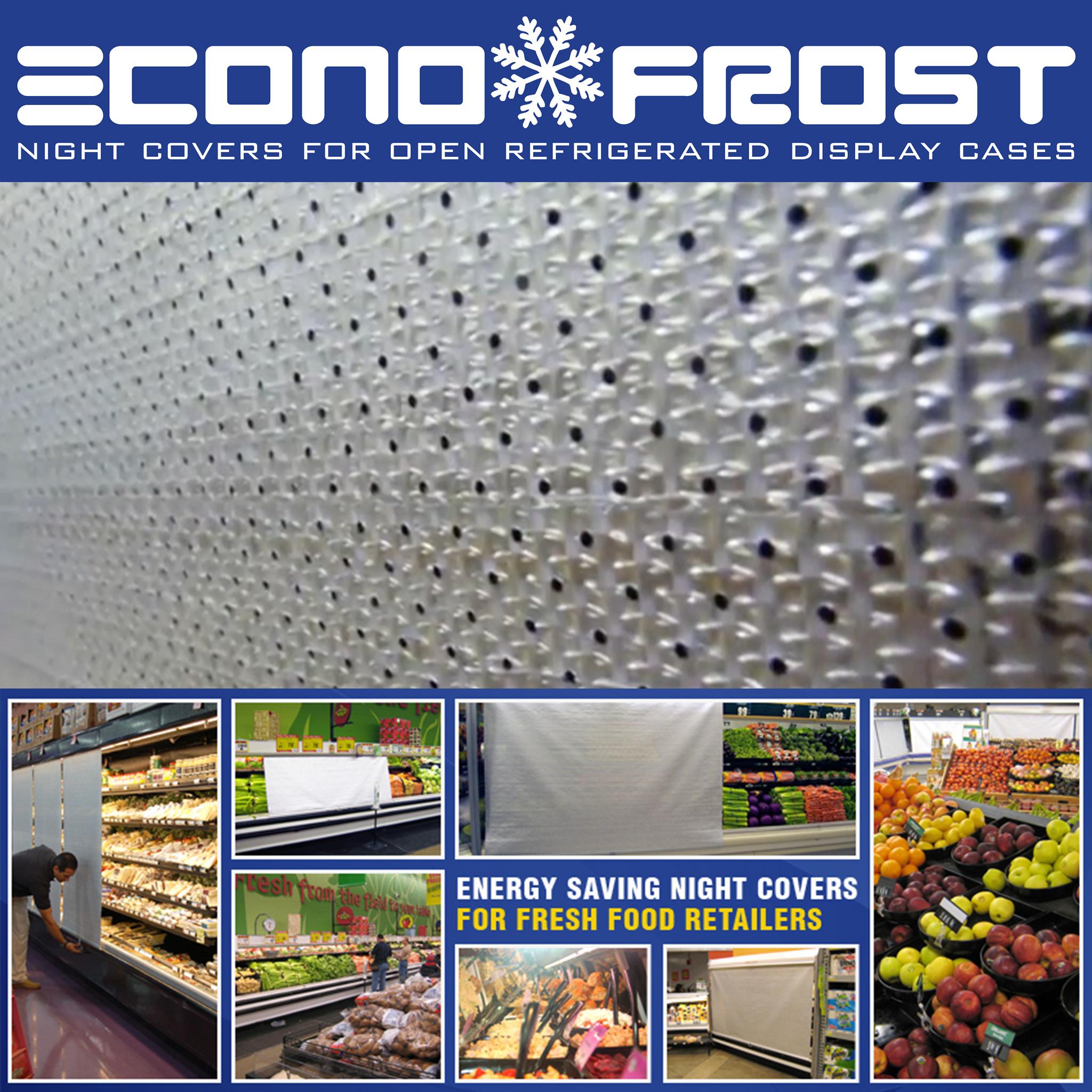
- Installed Econofrost night covers on open meat and dairy cases
- Integrated sensors to track light and cover metrics
Results After 3 Months:
- 15% reduction in energy use for refrigerated departments
- 20% improvement in shelf life for meat and leafy greens
- Dashboard revealed peak inefficiency during staff stocking periods, prompting process changes
- ESG report included verified carbon reduction tied directly to case-level upgrades
How to Start Building Your Dashboard
Retailers don’t need to overhaul every case at once. Begin with a pilot project:
Step 1: Choose high-impact departments (e.g., meat, dairy, or produce)
Step 2: Install SafeSpectrum™ LEDs + Econofrost covers Measure before-and-after performance.
Step 3: Connect case-level sensors to your existing facility management system Or use standalone cloud solutions for ease of deployment.
Step 4: Track performance over time
Look for dips in compressor load, improved shelf life, and fewer product markdowns.
Bigger Picture: Efficiency + Accountability
With real-time monitoring of lighting and night cover variables, stores gain:
- Operational clarity: Know exactly where and why energy is wasted
- Increased uptime: Proactively address lighting or cover malfunctions
- ESG alignment: Demonstrate measurable progress with auditable data
- Cost savings: Fewer rewraps, less spoilage, reduced energy bills
Final Thoughts
Creating a smart dashboard that includes lighting and night cover metrics transforms refrigeration from a black box to a transparent, controllable system.
With tools like SafeSpectrum™ LED lighting and Econofrost night covers, retailers can:
- Optimize case-level efficiency
- Reduce energy waste and food shrink
- Build a stronger ESG profile backed by real-time data
Learn more about smart case management at : www.energy-savings-refrigeration.com
References
Retail Energy Monitoring Whitepaper – Cold Case Technologies, 2023
Promolux Technical Guide on Spectrum Impact and Heat Load (Internal Data)
Supermarket Energy Management Trends – GroceryTech Journal, 2022
