
Maximizing Savings Through a Holistic Approach to Refrigeration Efficiency
When it comes to energy audits in supermarkets and grocery environments, the focus tends to land heavily on HVAC systems, refrigeration compressors, and insulation performance. But two critical variables are often overlooked—lighting systems and night covers on refrigerated display cases.
Yet these elements play a pivotal role in shaping energy demand, product shelf life, and storewide thermal performance. To conduct a truly effective audit, retailers and facility managers must evaluate both light quality and night cover usage as key components of operational efficiency.
The Hidden Role of Lighting in Energy Performance
Retail lighting isn’t just about visibility—it also creates a thermal load that impacts refrigerated displays.
Standard high-intensity LEDs or fluorescent tubes used in ceiling fixtures or within cases often:
Emit short-wavelength (blue/violet) light, increasing photooxidation and heat
Add radiant warmth to display surfaces, particularly in open multi-deck cases
Force compressors to work harder, even when temperature setpoints are unchanged
This phantom heat from lighting can go undetected in traditional audits, but the consequences are real:
- Elevated case temperatures
- More frequent compressor cycling
- Reduced product shelf life
- Higher power bills
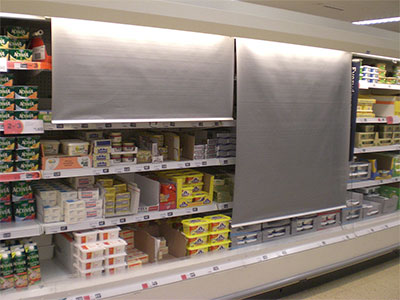
Night Covers: A Passive Tool That Packs a Punch
Refrigeration night covers are among the simplest and most cost-effective energy-saving technologies available. Yet many stores fail to use them consistently or maintain them properly.
When used correctly, night covers act as passive barriers against:
Heat infiltration from ambient store lighting and HVAC
Moisture condensation and temperature swings
Refrigeration overcompensation during off-hours
Studies and real-world audits show night covers can reduce refrigeration energy demand by 8–15%, especially in open refrigerated cases for meat, produce, or dairy.
What Most Energy Audits Miss
Typical energy audits measure electrical consumption across systems but often neglect to isolate the impact of lighting and night covers. Without tracking these variables, key insights get lost.
What’s Usually Measured:
- Compressor and condenser loads
- Overall kWh usage
- Airflow and defrost schedules
- Door open times (if applicable)
What’s Often Ignored:
- Heat contribution from LED spectrum
- Presence and quality of night covers
- Staff compliance with cover deployment protocols
- Display case temperature fluctuations during lighting hours
Why These Metrics Matter
Incorporating lighting and night cover evaluations gives energy auditors a clearer picture of case-level performance and opportunities for optimization.
Key Metrics to Include:
- Spectrum intensity & lighting wattage (W/m²)
- Thermal load calculations based on light placement
- Night cover deployment hours vs. display schedule
- Shelf-level temperature variations (with and without covers)
When these variables are tracked over time, correlations emerge between lighting settings, night cover usage, and energy spikes—unlocking smarter operational strategies.
SafeSpectrum™ Lighting + Econofrost Night Covers = Data-Driven Savings
Retailers who adopt spectrum-controlled LED systems like SafeSpectrum™ and premium night cover solutions such as Econofrost already have a head start.
Here’s why they’re audit-friendly:
- SafeSpectrum™ LEDs emit a balanced spectrum that reduces heat, slows oxidation, and enhances product appearance—without burdening refrigeration.
- Econofrost night covers are engineered with reflective materials and micro-perforation to maintain cold air while limiting humidity and light exposure.
When used together, they enable energy audits to show measurable reductions in:
- Compressor runtime
- Case defrost frequency
- Product shrink due to temperature or light exposure
- Overall refrigeration kWh usage
Real-World Example
In a multi-location grocery chain audit:
Stores using standard lighting with no night covers saw 25% more compressor cycles during nighttime hours.
Stores with SafeSpectrum™ LEDs and properly deployed Econofrost covers maintained lower average case temps and reported a 12% drop in energy use in refrigerated departments.
This clear evidence shows that adding these variables to audits leads to actionable improvements.
Recommendations for Energy Auditors
To future-proof audits in supermarkets, energy consultants should:
- Include light spectrum and placement evaluation in the audit checklist
- Validate type and condition of night covers in all open refrigerated cases
- Collect hour-by-hour temp data in cases with and without covers
- Analyze compressor runtime correlation with lighting schedules
- Recommend spectrum-controlled LEDs and modern cover systems
Beyond Energy: The Broader Benefits
Incorporating lighting and night covers into audits doesn’t just save energy—it boosts store operations:
- Reduces food spoilage and shrink
- Improves shopper trust through better product appearance
- Boosts sales margins with longer shelf life
- Lowers maintenance costs through reduced wear on equipment
Final Thoughts
Lighting and night covers are often treated as accessories—but they’re actually powerful levers for reducing refrigeration energy use and improving product quality.
If your energy audits aren’t tracking them, you’re missing a key opportunity.
With tools like SafeSpectrum™ LED lighting and Econofrost night covers, retailers can optimize refrigeration systems, reduce spoilage, and unlock measurable savings.
Learn more about audit-ready lighting and night cover technologies at:
References:
Internal audit data from Promolux and Econofrost client trials (2023–2024)
Department of Energy Retail Energy Savings Guide (USA)
Supermarket Refrigeration Energy Report – Refrigeration Load Factors & Thermal Influence (Independent Consultancy, 2022)
